
Executive Summary
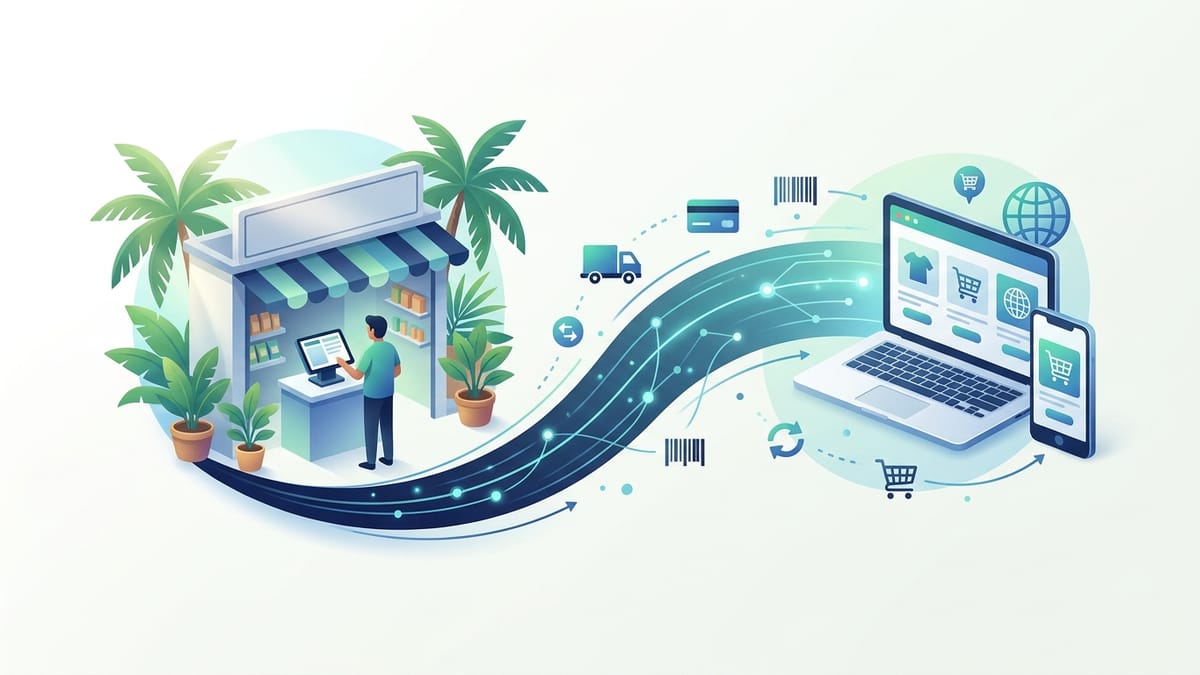
Sri Lankan retail is undergoing a pivotal shift. Businesses that flourished through physical storefronts along Galle Road in Colombo, tourist hotspots inside Galle Fort, or bustling commercial strips in Jaffna and Kandy now confront a critical friction point: their brick-and-mortar points of sale (POS) operate in complete isolation from their digital storefronts. When in-store counters and digital carts fail to communicate in real time, stockouts, double-selling, administrative fatigue, and damaged customer trust follow immediately. Achieving true omnichannel retail in Colombo and beyond requires a strategic bridge between existing hardware, regional enterprise resource planning (ERP) databases, and digital e-commerce architectures. This guide outlines how Sri Lankan brands can successfully bridge this divide, modernize their inventory management, and realize compounding returns from retail digital transformation.
1. The Disconnected Reality: Why Island Retailers Struggle with Stockouts
For decades, retail in Sri Lanka relied on localized, single-terminal POS setups or on-premise relational database engines like Microsoft SQL Server and MySQL running on local back-office desktops. A customer buying a designer linen shirt at a store on Duplication Road or a brass souvenir in Kandy had their transaction recorded locally.
However, the sudden rush toward web stores built on Shopify, WooCommerce, or Magento has created a dual-reality problem:
- The Ghost Inventory Trap: An item is sold at the cash counter at 3:15 PM. At 3:20 PM, an online customer in Negombo places an order for the exact same SKU. The e-commerce platform reports the item is available because the stock update requires manual tallying at 8:00 PM. The brand must then issue an apology, process a refund, or ship an alternative, degrading customer retention.
- Siloed Customer Data: In-store shoppers remain anonymous, while online shoppers generate rich behavioural profiles. Retailers cannot reward a frequent VIP customer when they walk into a physical showroom.
- Manual Spreadsheet Fatigue: Staff waste hours exporting CSV files from legacy systems, editing them manually, and uploading them to digital backends. In high-velocity seasons—such as the Sinhala and Tamil New Year or December holiday shopping—this operational lag becomes disastrous.
Solving these issues requires moving away from asynchronous batch exports to an event-driven POS ecommerce sync in Sri Lanka.
2. Architectural Blueprints for POS & E-Commerce Integration
To bridge the gap between in-store hardware and online platforms, engineering teams have three primary integration patterns available:
A. Direct API-to-API Webhooks (Modern Cloud POS)
If your retail footprint utilizes modern cloud-native systems (such as Odoo, Vend/Lightspeed, or Square), both the POS and the online store (e.g., Shopify, WooCommerce) provide RESTful or GraphQL APIs.
- The Mechanism: Whenever a sale occurs at the physical register, an automated webhook fires an HTTP
POSTpayload to the e-commerce middleware, decrementing the corresponding SKU stock instantaneously. - Best For: Fast-growing apparel, consumer electronics, and lifestyle brands operating across Colombo 03, 07, and Kandy.
B. Middleware Integration (Hybrid & Legacy Systems)
Many established Sri Lankan merchants use locally built or specialized legacy retail software (such as Accura, Visual POS, or custom .NET applications). These systems rarely support modern webhooks.
- The Mechanism: A secure, lightweight background agent (daemon) is deployed on the local store server. It monitors transaction logs or database trigger tables for inventory modifications. It then batches or streams these delta changes to a cloud middleware layer via encrypted TLS connections. The middleware normalizes the payload and pushes stock updates to your online store.
- Best For: Multi-location supermarkets, pharmaceutical retailers, and departmental stores throughout Jaffna, Kurunegala, and Galle.
C. Centralized Headless ERP
Rather than forcing the POS to talk directly to the e-commerce engine, both surfaces consume data from a single headless source of truth (such as an ERP system like SAP Business One, Microsoft Dynamics 365, or an open-source Frappe/ERPNext deployment).
- The Mechanism: The ERP acts as the centralized master for product information management (PIM), customer records, and physical ledger management. Both web storefronts and terminal cash registers read and write directly to this core hub.
- Best For: Enterprise organizations and diversified conglomerates managing complex distribution networks across the island.
3. Managing High-Velocity Multi-Location Hubs across Sri Lanka
Effective inventory management in Sri Lanka must account for unique geographical and logistics challenges. Brands often operate a flagship boutique in Colombo, retail branches in regional cities (such as Galle and Jaffna), and a central warehouse in Kelaniya or Wattala.
Dynamic Stock Routing and Fulfillment
When an online order is placed by a shopper in Batticaloa, which location should fulfill it?
- Proximity-Based Routing: The middleware queries stock levels across all hubs and routes fulfillment to the closest regional branch, lowering domestic courier fees and delivery turnaround.
- Virtual Safety Buffers: Sri Lankan retail foot-traffic can spike unpredictably. By implementing software-defined "safety stock" rules (e.g., maintaining a buffer of 2 units hidden from the web catalog), you protect your physical retail staff from having a floor item bought online while a customer is holding it at the checkout counter.
- Click-and-Collect (BOPIS): Buy Online, Pick Up In Store is growing rapidly among urban professionals in Colombo. Real-time POS visibility ensures that customer orders are reserved immediately at the selected branch, printing a pick-slip at the cash register before the customer arrives.
4. Payments, Cash-on-Delivery, and Local Fiscal Compliance
A critical element of retail digital transformation in Sri Lanka is managing diverse payment preferences and government fiscal obligations.
Unifying Payment Reconciliation
- Digital Payment Gateways: Integrating gateways like PayHere, WebXPay, or direct bank IPGs (Commercial Bank, Sampath Vishwa, HNB) alongside in-store POS card swipers (mPOS and Verifone terminals) requires unified ledger entries. When a return happens online, can it be refunded in-store? Omnichannel integration creates unique transaction identifiers that reconcile across bank merchant accounts and online accounts effortlessly.
- Managing Cash-on-Delivery (COD): Over 60% of domestic Sri Lankan e-commerce remains cash-on-delivery. If an item is out for delivery via local couriers (such as Domex, Pronto, or Fardar), it is effectively in "limbo"—neither in the warehouse nor completed as a sale. Your POS-eCommerce sync system must mark these items as Committed, preventing false availability without finalizing the financial ledger until courier cash remittance clears.
- VAT and Simplified VAT (SVAT) Automation: Tax compliance in Sri Lanka requires accurate reporting. Integrating POS transaction logs with e-commerce data feeds ensures VAT adjustments apply uniformly across both retail floors and online receipts, reducing manual audit discrepancies.
5. Measuring ROI: The Real Cost of Siloed Systems
Investing in unified POS and e-commerce infrastructure yields tangible financial returns:
| Operational Metric | Siloed (Manual / Legacy) | Integrated (Real-Time Sync) |
|---|---|---|
| Stockout & Oversell Rate | 8% – 14% of monthly web orders | < 0.2% |
| Staff Reconciliation Time | 10–15 hours weekly per store | Fully Automated (Zero human hours) |
| Order Processing Window | 24 to 48 hours | Under 15 minutes |
| Customer Lifetime Value (LTV) | Standard, transactional | 28% increase via omnichannel loyalty |
Strategic Payback Timeline
For a medium-sized retailer with three physical locations (Colombo, Kandy, Galle) and a growing web presence, the capital cost of deploying synchronization middleware typically pays for itself within 3 to 6 months. The return is generated by eliminating canceled orders, reclaiming valuable operational hours, and maintaining optimal stock velocities without carrying excess inventory.
Realistic Implementation Roadmaps & Pitfalls
1. The Clean SKU Master
Before writing code or installing middleware, audit your product identifiers. If your physical POS identifies a cotton shirt as SHIRT-CTN-BL-M while your Shopify store lists it as BL-COTTON-MED, your sync will fail. Standardize all barcode values, EANs, and SKUs across all channels as Step 0.
2. Network Resilience in Regional Outlets
Internet infrastructure in provincial hubs outside Colombo can experience intermittent fiber or cellular connectivity drops. The integration architecture must be fault-tolerant and offline-first. In-store registers should continue processing offline sales during network dropouts; once connection is restored, the daemon must queue and push backlog updates chronologically using timestamp collision logic.
3. Staff Training and Change Management
Cashiers and floor supervisors need clear, simple protocols. When an item is marked damaged or pulled from the shelf for display, floor workers must immediately log that movement in the POS terminal to keep online stock levels accurate.
Frequently Asked Questions
1. Can we integrate our locally built, legacy Windows-based POS with a modern Shopify or WooCommerce store?
Yes. You do not need to replace your entire legacy POS system to achieve real-time synchronization. Custom middleware or lightweight background agents can be deployed on your local system to watch your underlying database (such as SQL Server or MySQL). Whenever an update occurs, the agent securely passes that data to modern cloud APIs via encrypted JSON webhooks.
2. How does the integration handle internet outages at physical branches?
Architectures built on an offline-first queue model ensure that store operations never halt during connectivity drops. The POS records transactions locally. As soon as the branch re-establishes an internet connection, the system processes the local synchronization queue, compares timestamps, and decrements web inventory automatically while handling any edge-case collisions gracefully.
3. What is the difference between batch file sync (FTP/CSV) and event-driven API synchronization?
Batch syncing relies on timed intervals (e.g., once every night or every 4 hours) to upload a large CSV file of stock levels. This leaves wide operational windows where overselling can occur. Event-driven API synchronization transmits changes instantly (within milliseconds) whenever a sale, return, or stock adjustment happens, guaranteeing reliable inventory accuracy across all channels.
Build Your Resilient Omnichannel Infrastructure
Achieving seamless integration between your physical stores and digital channels is not just a technical upgrade—it is a foundational business strategy for surviving and thriving in the modern Sri Lankan economy.
At SafeNet Creations, we combine enterprise-grade software engineering with deep local market knowledge. From our technology center in Jaffna to our executive coordination team in Colombo, we build custom retail middleware, automate end-to-end multi-location data pipelines, and architect high-performance e-commerce integrations tailored specifically for local infrastructure challenges.
Ready to unify your retail POS and e-commerce operations? Partner with SafeNet Creations to streamline your business, eradicate stockouts, and deliver exceptional experiences to every customer, anywhere in Sri Lanka.
Explore Related SafeNet Services in Sri Lanka
- Website Design & Development Company in Sri Lanka — Fixed-scope Next.js websites from LKR 59,900
- AI Voice Agents, AI Receptionists & Chatbots in Sri Lanka — English, Tamil & Sinhala conversational AI
- WhatsApp Business Automation & Bot Development in Sri Lanka — Official WhatsApp API, CRM integration & booking flows
- SEO Company & SEO Services in Sri Lanka — Technical SEO, Search Console & local search visibility
- Software Development Company in Sri Lanka — Custom dashboards, CRMs & web portals
- Web Design, WhatsApp & Digital Marketing Prices in Sri Lanka (LKR) — Full transparent pricing catalogue