

Poaching is the biggest cost on a Jaffna sea cucumber farm.
GMT FarmEye is built to catch people: poachers walking in from the shore or coming through the water. AI on a farm computer watches every camera day and night, so nobody has to sit at the monitor. When it finds a person, or a boat, the owner and guards get a phone alert with a snapshot and a siren. Video is recorded on the farm and stays there.
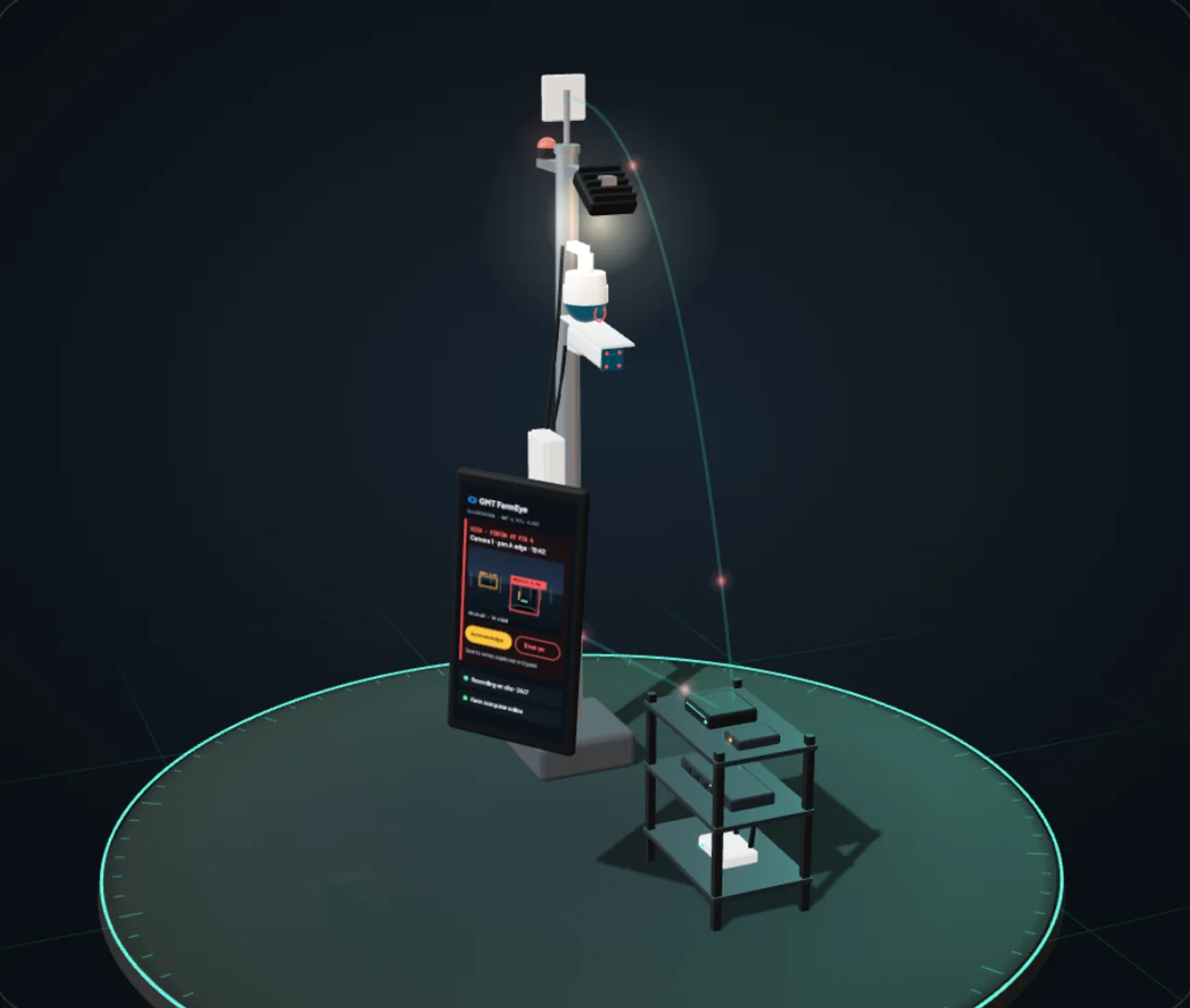
3D MODEL · NOT TO SCALE
Sea cucumber pens spread across open water, and one night of poaching can wipe out months of work.
A guard cannot watch a whole farm in the dark. Most intrusions are found the next morning, if at all.
We develop each system from problems we see on our own sea cucumber farm in Jaffna.
Four steps.
- Step 01
Watch
Long-range infrared cameras cover the landing points and pen edges, day and night.
- Step 02
Detect
AI on the farm computer looks for people walking in from the shore or coming through the water, and for boats, inside protected zones, with separate day and night rules.
- Step 03
Alert
Only when it finds one do the owner, supervisor and guard get a phone alert with a snapshot and a siren sound.
- Step 04
Respond
Today the owner acknowledges and resolves each alert, and every alert is logged. Planned: the camera follows the intruder and a siren and flood light switch on.
What the GMT FarmEye is made of.
Pick a part to find it on the model above. Use the exploded view to see inside.
See it in motion.
Rendered from the same 3D model. Below it: real alerts from our farm.
Real alerts from our own farm.
Real · not animation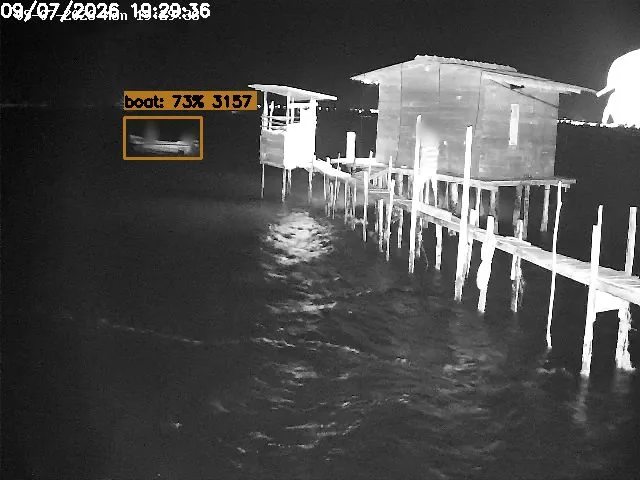
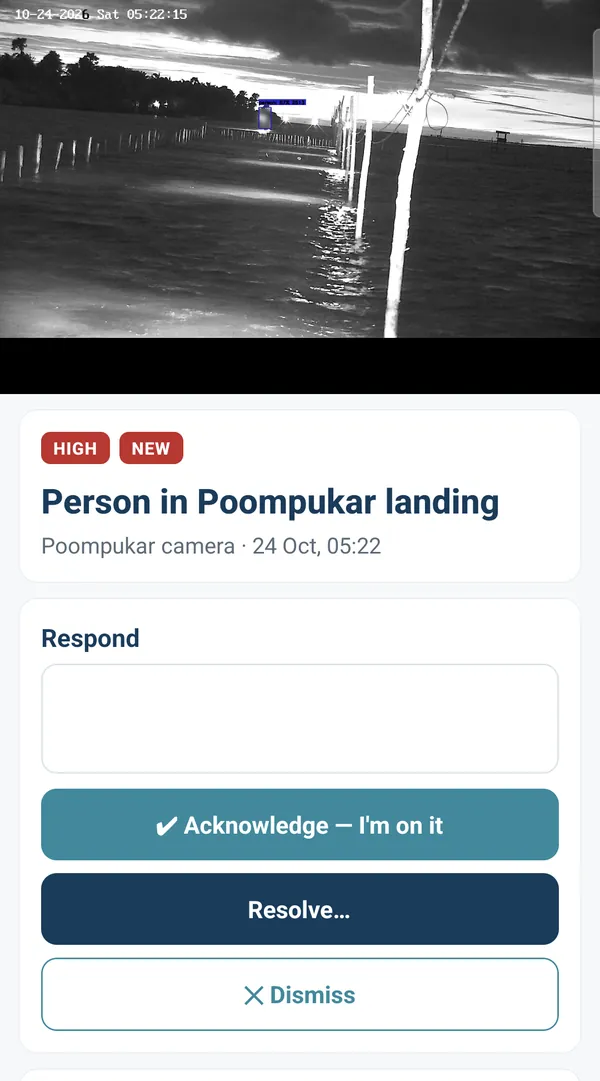
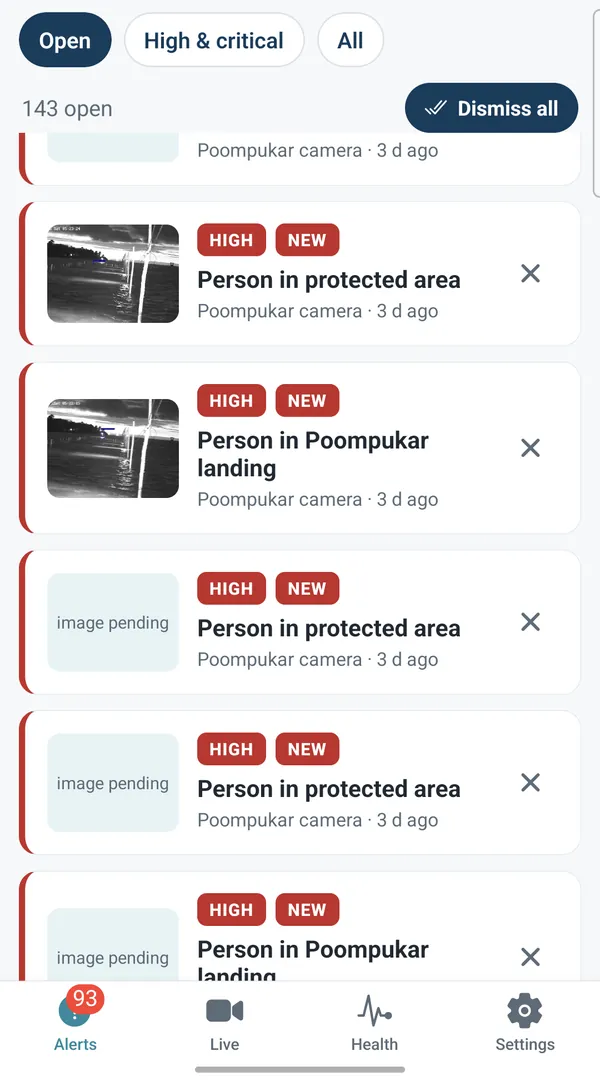
Real alerts from the field trial on our farm, captured from the owner’s phone. People are blurred. Not every alert is a poacher: the trial also counts false alarms.
Before we install it on other farms.
Each question gets a test and a pass mark agreed with the site owner. Results are published only after the trial.
| Question | How we test it | What “pass” looks like |
|---|---|---|
| How far can it see at night? | Night tests at each landing point with a boat and a person | Reliable detection at the distance each zone needs |
| How many false alerts? | Count alerts from waves, birds and lights over several weeks | Few enough that guards trust every alarm |
| How fast is the alert? | Time from detection to the phone notification | Seconds, with the snapshot attached |
| What if the internet drops? | Cut the farm link during tests | Detection and recording keep working; alerts sync later |
| Do guards use it? | Response logs and feedback during the trial | Alerts are acknowledged and acted on |
One camera recording, detecting and sending the first phone alert.
Control-room dashboard and the mobile app for owner and guards.
AI check of each snapshot, siren and PTZ automation, rules editor.
Farm computer, camera network and a second recorder.
Guard shifts, WhatsApp and voice escalation, more sites.
Show us your farm problem.
- We read itEvery enquiry is acknowledged and reviewed by an engineer.
- Free screening callFit, decision-maker and budget, in 15 to 20 minutes.
- Fixed-fee assessmentIf it fits, you get a quote for a site visit and measurements.