

AquaSentinel: an underwater vehicle that inspects your pens.
Checking pens in murky water means wading, diving or guessing. AquaSentinel is our tethered inspection vehicle: six thrusters, a downward camera with lights and a laser scale, flown from a tablet on the walkway. The P1 engineering design is complete and in review; building the first prototype is next.
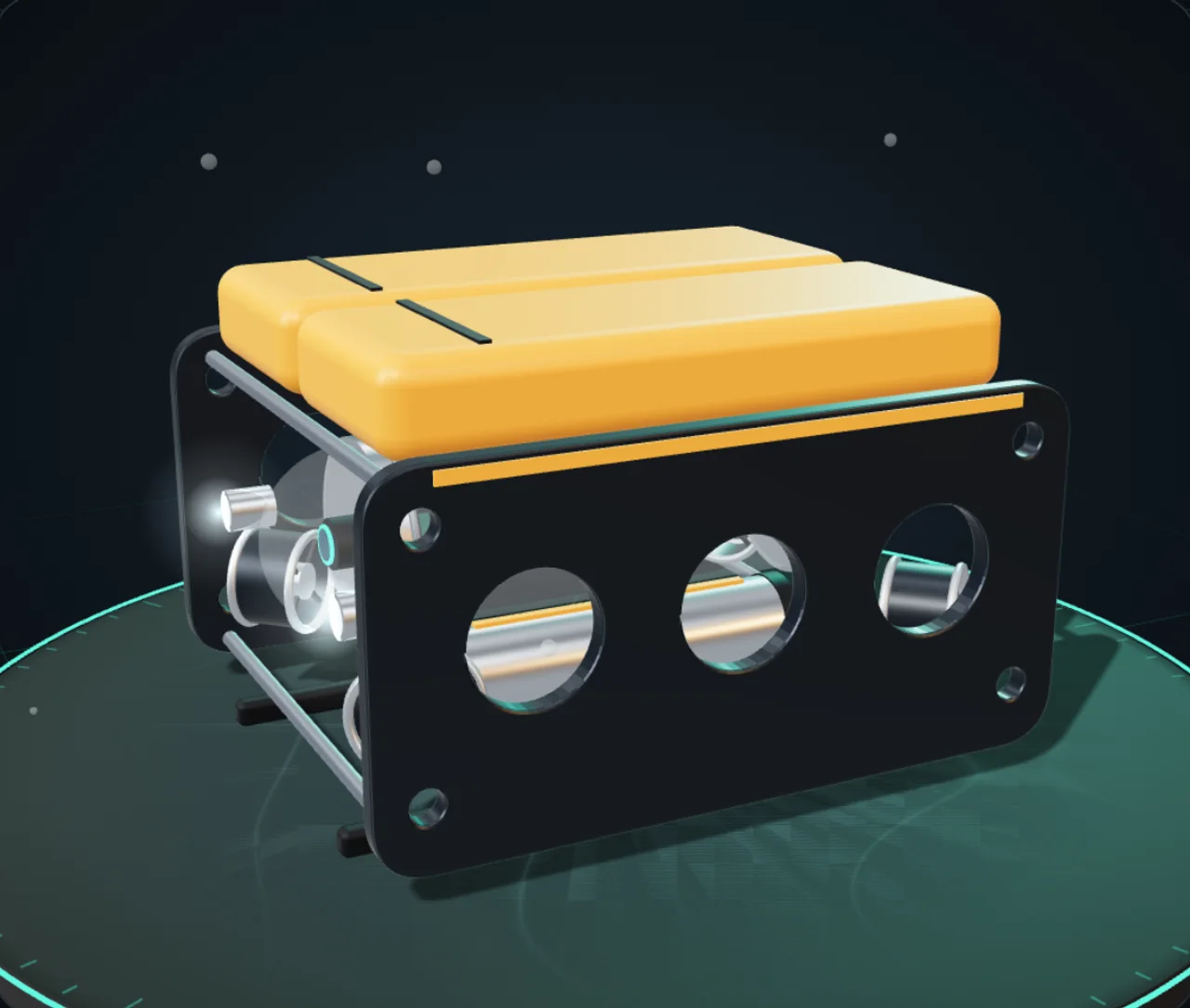
CONCEPT · NOT TO SCALE
Net holes, broken poles and stock losses are often found late, sometimes only at harvest.
Inspection in turbid water is slow, tiring and depends on one person’s eyesight.
We develop each system from problems we see on our own sea cucumber farm in Jaffna.
AquaSentinel underwater vehicle: four steps, in the intended design.
- Step 01
Launch
Lowered from the walkway on its tether to a surface buoy. It hovers level, neutrally buoyant.
- Step 02
Fly
Six guarded thrusters move it along the net wall and over the bed, holding depth.
- Step 03
Record
Video and stills with time, depth and position. Two laser dots 100 mm apart show the real size of what it sees.
- Step 04
Flag
Later stage: AI suggests possible net damage and counts stock for a person to confirm.
What the AquaSentinel underwater vehicle is made of.
Pick a part to find it on the model above. Use the exploded view to see inside.
Engineered, part by part, before we build.
Real CAD from the P1 engineering package (October 2026). It is in engineering review: not yet released for manufacturing, and not yet tested in water.
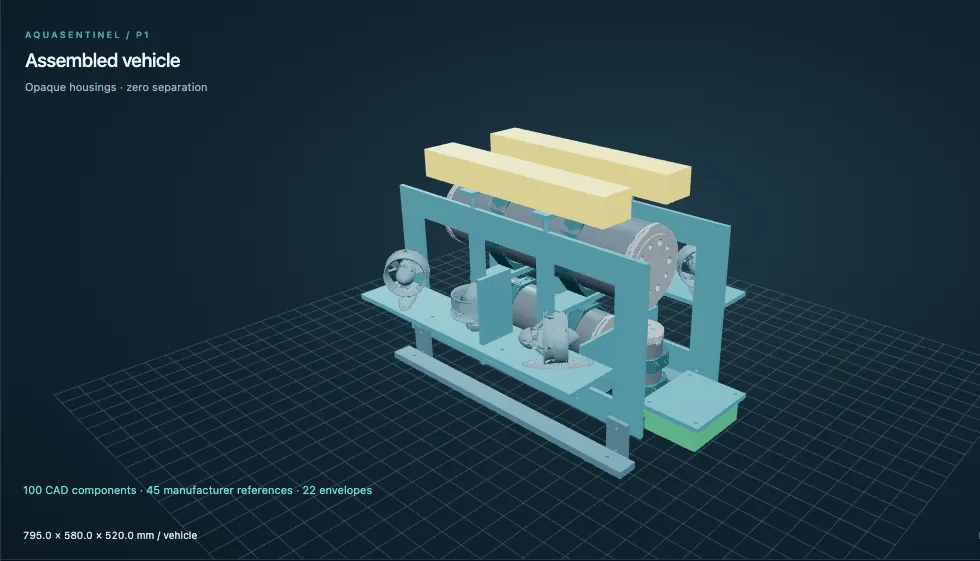
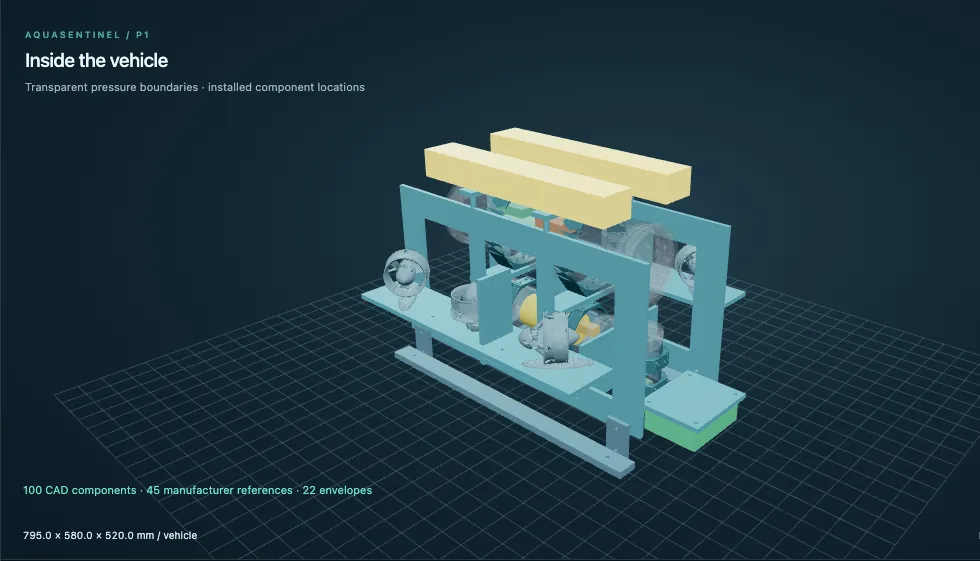
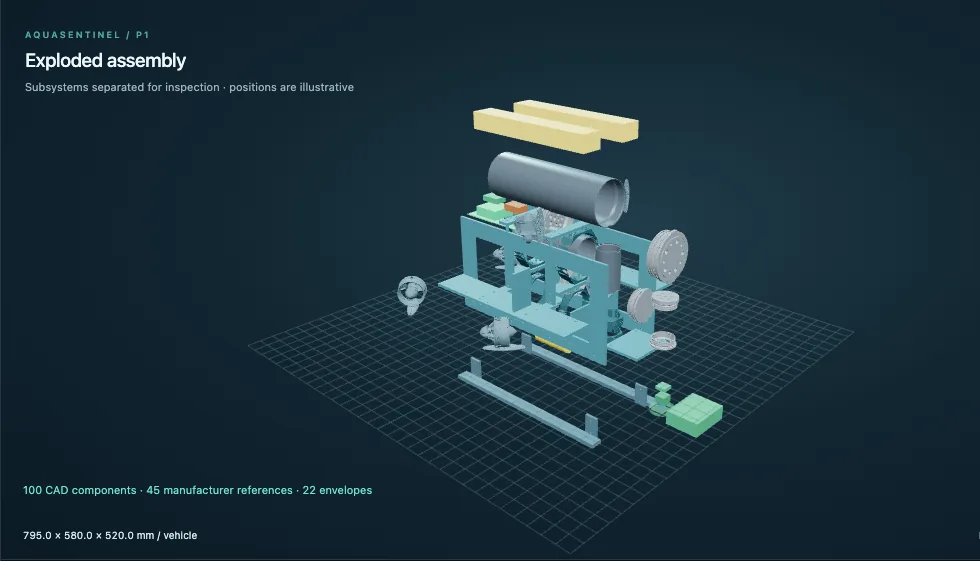
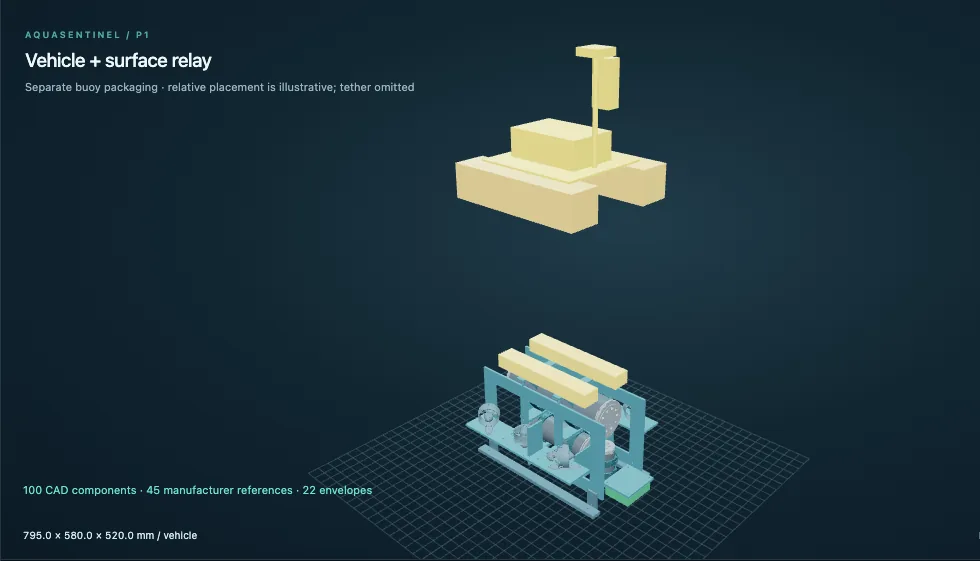
| Size | 795 × 580 × 520 mm |
|---|---|
| Thrusters | 6 × Blue Robotics T200, guarded |
| Housings | Electronics 6″ × 500 mm, battery 4″ × 300 mm, downward camera 3″ × 150 mm |
| Control | Pixhawk autopilot with a Jetson AI computer |
| Sensing | Downward camera, two lights, laser scale (two dots 100 mm apart), depth sensor |
| Link | Tether to a surface buoy with GNSS positioning and a radio link |
| CAD | 100 components: 45 manufacturer parts, 33 custom parts, 22 space envelopes |
| Software | Control, mission planning, fault handling and logging; 65 tests pass on the bench (dry run) |
Engineering review. Wiring protection, mounting checks and pressure tests come before any water test.
Next- Build the frame with local polymer and metal printing
- Bench-test power, wiring and fault shutdown
- Pressure-check the housings
- Controlled-water tests, then a lagoon trial on our pens
See it in motion.
Left: rendered from our 3D model. Right: an AI-generated concept video of the intended mission. Neither is footage; real test video goes here after the first water tests.
Before it becomes a product.
Each question gets a test and a pass mark agreed with the site owner. Results are published only after the trial.
| Question | How we test it | What “pass” looks like |
|---|---|---|
| Can it see in our water? | Visibility tests across seasons and times of day | Net mesh and stock readable on screen at working distance |
| Is it controllable in current? | Station-keeping runs beside a pen wall | Holds position long enough to inspect a panel |
| Is the tether manageable? | Deployment along a full pen perimeter | No snagging on poles or nets |
| Are the housings safe? | Pressure, power and heat checks before any water test | No leaks, no overheating, safe shutdown on faults |
| Does the report save time? | Compare with a manual inspection of the same pens | Less time for the same or better coverage |
| Are suggestions trustworthy? | Count false alerts and missed holes on known damage | A person confirms every flag; error rates published |
Concept, 3D design intent and AI concept videos.
P1 engineering package: 100-part CAD, drawings, build guide and control software.
Build P1: print and machine the frame, fit housings, thrusters and electronics.
Pressure, power and controlled-water tests, with records kept.
Lagoon trial on our own pens.
Show us your farm problem.
- We read itEvery enquiry is acknowledged and reviewed by an engineer.
- Free screening callFit, decision-maker and budget, in 15 to 20 minutes.
- Fixed-fee assessmentIf it fits, you get a quote for a site visit and measurements.